Modern vehicles are expected to start instantly, idle smoothly, and deliver responsive performance in a wide range of driving conditions. Whether navigating city traffic or accelerating onto a highway, drivers rarely think about the ignition system working behind the scenes. Yet one component plays a particularly important role in making all of this possible—the ignition pencil coil.
Over the past two decades, most gasoline engines have transitioned from traditional distributor-based ignition systems to coil-on-plug technology. This shift was not simply about adopting newer hardware; it was driven by the need for greater ignition precision, improved fuel efficiency, and lower emissions. Today, the pencil ignition coil has become a standard solution in modern engine design because it supports all of these goals while improving overall system reliability.
Unlike older ignition systems that relied on a single coil and distributor to deliver spark to every cylinder, a coil on plug ignition coil is installed directly above each spark plug. Every cylinder has its own dedicated ignition source, allowing the engine control unit (ECU) to manage ignition timing with much greater accuracy.
This design also eliminates the need for long spark plug wires. Since high voltage travels only a very short distance, electrical losses are reduced and electromagnetic interference is minimized. The result is a stronger, more consistent spark that helps ensure complete combustion under a variety of operating conditions.
| Ignition System | Configuration | Key Advantage |
|---|---|---|
| Distributor Ignition | One coil with distributor | Simple design for older vehicles |
| Multi-Outlet Ignition Coil | One coil serves multiple cylinders | Balanced cost and reliability |
| Ignition Pencil Coil | One coil per spark plug | Precise ignition control and improved efficiency |
For today's engines, especially those equipped with electronic engine management systems, this level of precision is becoming increasingly important.
Automotive engines have changed dramatically over the years. Higher compression ratios, turbocharging, direct fuel injection, and stricter emissions regulations all require ignition systems that can deliver reliable spark energy under greater pressure.
A high-quality automotive ignition coil must generate sufficient voltage while maintaining stable performance despite constant exposure to engine heat and vibration. The coil-on-plug configuration is particularly well suited to these challenges because each ignition event is independently controlled, allowing the ECU to optimize combustion in every cylinder.
This is one reason why manufacturers continue to rely on the direct ignition coil design across a wide range of passenger vehicles.

Although most ignition pencil coils operate on the same basic principle, their long-term performance depends heavily on how they are engineered.
Inside every coil are precision windings, insulation materials, magnetic cores, and electronic components that must function together thousands of times every minute. If insulation begins to deteriorate or internal resistance increases, ignition performance can gradually decline, sometimes long before a complete failure occurs.
For this reason, many OEM-quality and replacement ignition coil products are designed with heat-resistant epoxy encapsulation, durable winding technology, and carefully selected insulating materials. These features help maintain stable high-voltage output while protecting the coil from moisture, oil contamination, and continuous thermal cycling.
A good example is the ignition coil for Ford Taurus, such as the DQ-2002 model developed to OEM specifications. Designed for demanding engine environments, it provides reliable ignition performance and consistent spark delivery, making it a dependable choice for maintenance and aftermarket replacement without requiring modifications to the original ignition system.
Imagine a Ford Taurus that has accumulated well over 100,000 miles. The owner notices that cold starts take slightly longer than before, the idle feels less stable, and acceleration is no longer as smooth when merging into traffic.
After replacing worn spark plugs, the symptoms remain. Further inspection reveals that the original ignition coils have begun to weaken after years of exposure to heat and vibration.
Installing a new ignition pencil coil restores stable spark delivery, allowing the engine to run as it was originally designed. The improvement isn't about adding horsepower; instead, it is the return of smooth starting, crisp throttle response, and consistent engine operation that the driver may not have realized had gradually disappeared.
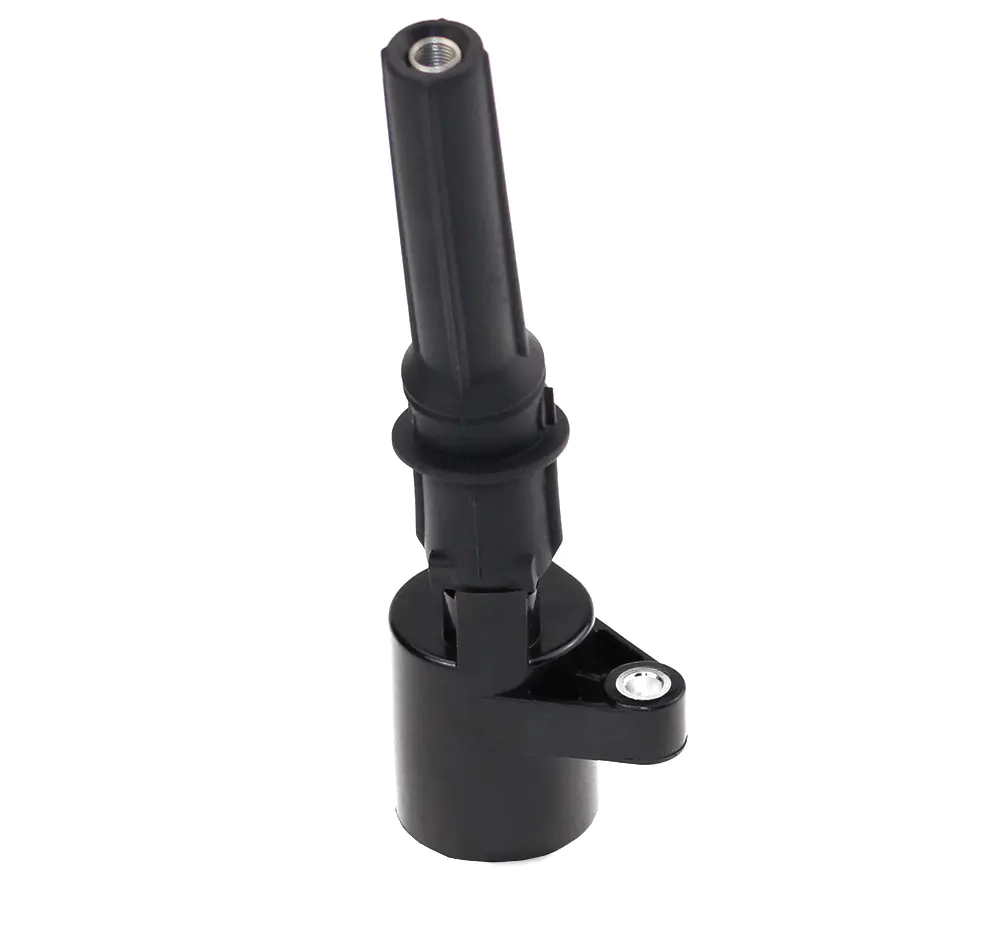
If the existing coil is worn or producing inconsistent spark energy, replacing it can restore efficient combustion. While fuel savings vary, many drivers notice smoother engine operation and more consistent fuel consumption.
Most modern gasoline engines use coil-on-plug technology, although some applications still employ multi-outlet ignition coils depending on engine design and cost considerations.
There is no universal service interval. Lifespan depends on engine temperature, driving conditions, spark plug maintenance, and manufacturing quality. In many cases, a well-built OEM ignition coil can provide reliable performance for many years.
The evolution of the engine ignition system reflects the broader development of modern automotive technology. As engines become more efficient and electronically controlled, ignition components must deliver greater precision and reliability than ever before.
Choosing a well-engineered ignition pencil coil built to OEM standards helps maintain dependable spark energy, stable combustion, and long-term engine performance. While it may be a relatively small component, its contribution to everyday driving is far greater than many drivers realize.