An Ignition Coil may not be the most visible component under the hood, but it has a direct impact on how smoothly an engine starts, accelerates, and performs every day. Every time you turn the key or press the start button, the ignition system relies on the coil to convert the battery's low voltage into the high voltage needed to fire the spark plug.
As engine technology has evolved, so have ignition systems. Today's vehicles use several different ignition coil types, each designed to meet specific engine layouts, performance requirements, and manufacturing objectives. Understanding these differences is valuable not only for technicians but also for distributors, aftermarket buyers, and vehicle owners looking for reliable replacement pa rts.
A modern Ignition Coil is far more than a simple electrical transformer. It works together with the ECU, fuel injection system, and spark plugs to ensure combustion occurs at precisely the right moment.
When the ignition system performs well, drivers experience quicker starts, smoother acceleration, stable idle, and better fuel efficiency. Conversely, an aging or poorly manufactured coil can contribute to misfires, hesitation, increased fuel consumption, and higher emissions.
For this reason, selecting the right automotive ignition coil is not simply about replacing a failed component—it is about maintaining the overall health of the engine ignition system.
Although every ignition coil performs the same basic task, different designs are optimized for different applications.
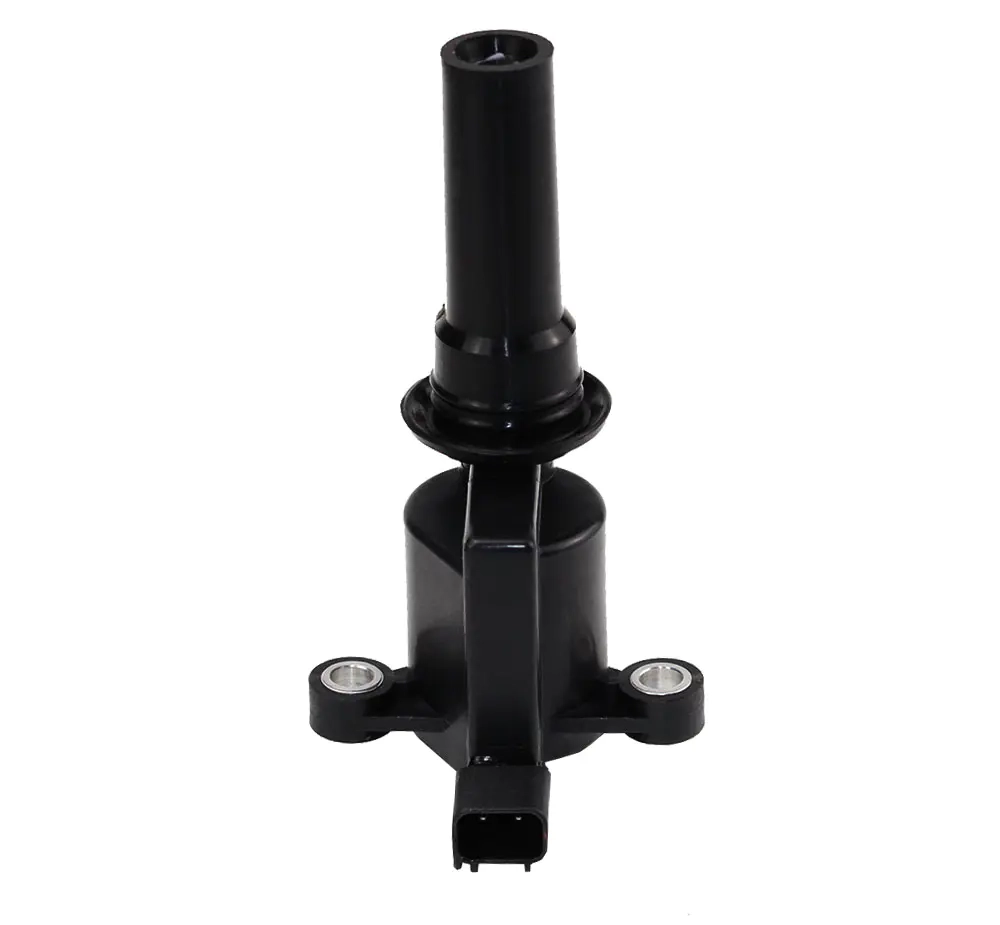
The pencil ignition coil, also known as a coil on plug ignition coil, is the most common design found in modern gasoline vehicles.
Each cylinder has its own dedicated coil mounted directly above the spark plug. Because high voltage travels only a short distance, energy loss is minimized while ignition timing becomes much more precise. This configuration supports turbocharged, direct-injection, and high-compression engines that demand accurate combustion control.
 A single-point ignition coil is commonly used in conventional ignition systems where one coil serves a single ignition circuit.
Its straightforward construction makes it easy to maintain and highly dependable for many applications. Although newer technologies have become more common, single-point coils continue to provide an effective solution for numerous replacement markets.
 A multi-outlet ignition coil delivers high voltage to multiple cylinders from a single unit, often working within a waste spark ignition system.
By reducing the number of individual coils required, this design simplifies the ignition system while maintaining dependable performance. It remains widely used in many four-cylinder engines where reliability and cost efficiency are equally important.
One of the most common misconceptions is that replacing only the ignition coil will solve every ignition-related problem.
In reality, the entire ignition system works as an integrated unit. Components such as the spark plug and ignition lead set also influence spark quality and combustion efficiency. A worn spark plug or deteriorated ignition lead can reduce the effectiveness of even the highest-quality coil.
For workshops and distributors, considering the ignition system as a complete package often leads to more reliable repairs and higher customer satisfaction.
While many replacement products appear similar from the outside, manufacturing quality determines how well an ignition coil performs over thousands of operating hours.
Heat-resistant insulation materials, precision copper windings, durable epoxy encapsulation, and rigorous testing all contribute to stable voltage output and longer service life. These factors become especially important in modern engine compartments where coils are exposed to continuous heat, vibration, and moisture.
Manufacturers with dedicated R&D capabilities and strict production standards are therefore better positioned to deliver consistent OEM-quality products rather than simply matching external dimensions.
As vehicle platforms continue to diversify, buyers increasingly prefer suppliers capable of providing complete ignition system solutions instead of individual components.
Zhejiang Jiaercheng Auto Parts Co., Ltd. (JEC) has specialized in the research, development, and production of automotive ignition products since 2000. With a 30,000 m² manufacturing facility and an annual production capacity exceeding nine million ignition coils, the company supports customers worldwide with OEM-quality products and customized manufacturing solutions. Its portfolio covers Pencil Ignition Coil, Single-Point Ignition Coil, Multi-Outlet Ignition Coil, Ignition Lead Set, and Spark Plug, allowing distributors and aftermarket customers to source compatible ignition components from a single manufacturer.
Rather than focusing on one product alone, this comprehensive product range helps ensure better compatibility across different vehicle models while simplifying purchasing and inventory management for customers.
There is no universal "best" ignition coil. The ideal choice depends on the vehicle's engine design, OEM specifications, and intended application.
Understanding the characteristics of different ignition coil types makes it easier to select the right solution, whether for routine maintenance, aftermarket replacement, or large-scale distribution. Combined with quality spark plugs and ignition lead sets, a reliable Ignition Coil helps the entire engine ignition system deliver the stable performance, efficiency, and durability that modern vehicles demand.